

I keep returning to the idea of ritual, to keep the weeks from dissolving into errands and work. Not the occasional dinner or the reunion planned months in advance, but the ordinary rhythm of a standing table. The same people, the same night, a meal that does not require an occasion.
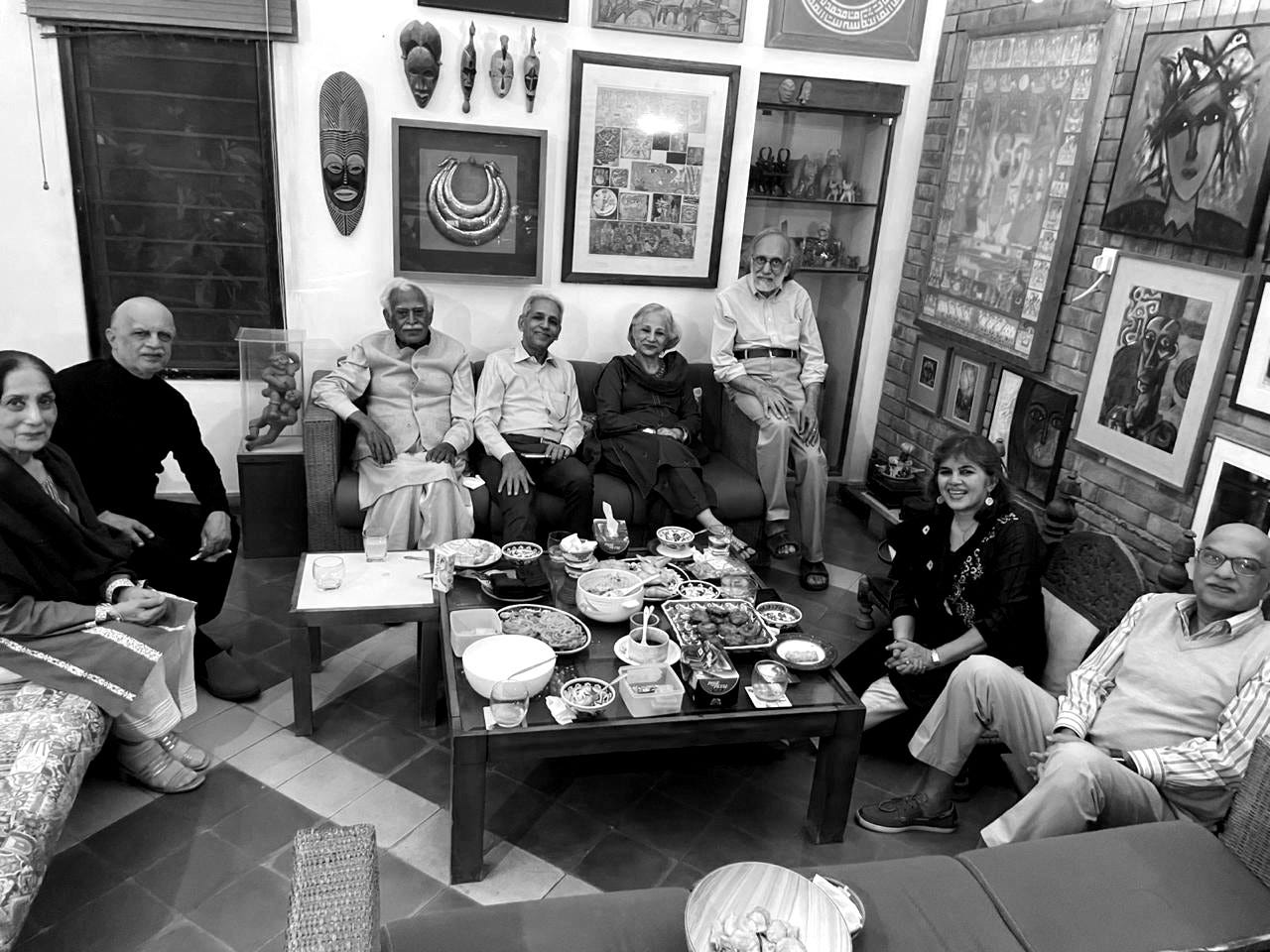
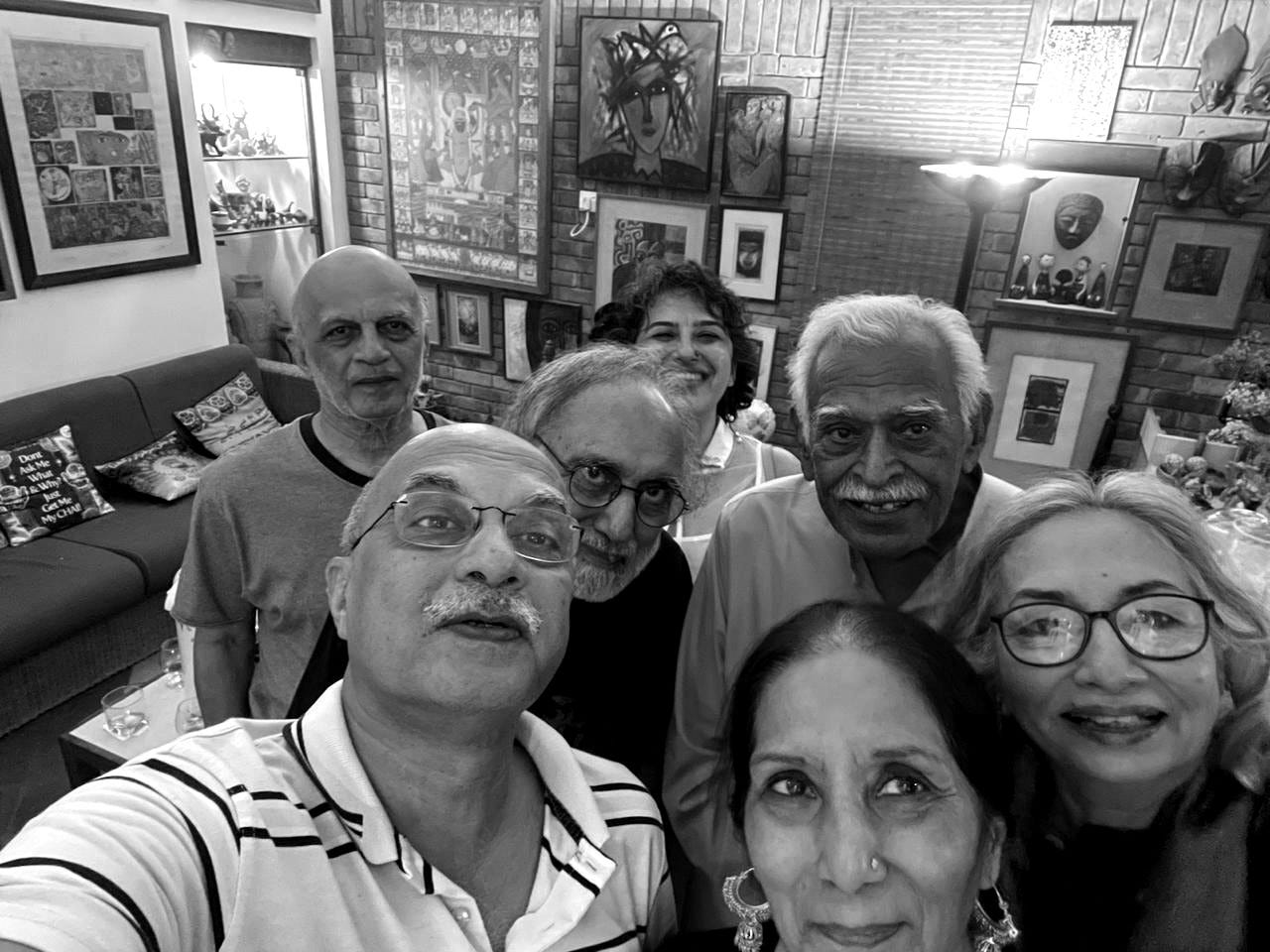
I have seen it work, and this is my inspiration: my parents continue to build their Sunday evenings around it, drawing a circle of 6-10 friends since 2013. My father’s memoirs fondly describe these evenings in their living room as a sanctuary. The food varies, the laughter does not. There is comfort in the knowledge that, whatever the week has taken out of you, Sunday night gives something back.
The same instinct animates others. The chef and author Samin Nosrat wrote recently about her Monday dinners, how she and her friends speak of them, half-seriously, as a religion. What she describes is familiar: the table that resets the week, the conversations that outlast the dishes. Her words remind me that the power lies not in the novelty of a menu, but in the commitment to return, week after week.
I’m thinking of a ritual to mark time as something more than a series of appointments. As a foodie, perhaps a table that waits for us each week, is steady enough to carry us into this next chapter.
Why It Matters
My wife and I are still in our 40s and healthy, but the case for such rituals is not only social or sentimental. There is unambiguous evidence that people who share meals, who see friends regularly, who keep social bonds alive, live longer and live better.
A meta-analysis that pooled data from more than two million people found that social isolation increases the risk of early death by nearly a third, and the effect of loneliness is not far behind. The U.S. Surgeon General has equated chronic loneliness to the health risks of fifteen cigarettes daily.
But statistics alone do not explain the pull of these gatherings. It is in the texture of the evening where the meaning resides. Food placed on the table, hands reaching for it, conversations drifting from the trivial to the confessional.
Neuroscience now tells us what intuition already knew: sharing food triggers oxytocin, the same hormone that binds infants to mothers. The same has been observed in wild chimpanzees, where food sharing elevated oxytocin levels even among non-kin, suggesting that the act itself taps a primal mammalian mechanism for trust and connection.
This is why ritual matters. Life has no shortage of occasions for distraction, solitude, or superficial contact. What we lack are the recurring structures that make intimacy unavoidable, that force us into long, unhurried conversations. These gatherings do not just fend off loneliness. They make time feel less like a current carrying us away and more like a table we return to, again and again.
Who Belongs at the Table
The first question that comes up is always who. Do these rituals depend on a circle that has been together for decades, or can they be built from looser ties?
My parents have the advantage of constancy. They have lived in the same city their entire lives. The core group of their Sunday evening friends have been woven into every chapter of their lives, decades before they began this weekly ritual. My father and his best friend have known each other since they were classmates in 5th grade. The ritual has only deepened what was already there.
On the other hand, I have lived in 8 cities over the last 28 years, and my wife has moved around at least as much. We are very fortunate to have close friends all over the world—but—they are all over the world. I wonder, do we have a critical mass within a reasonable radius of our present home?
Perhaps the more pressing truth is that rituals can also begin with less history. A few familiar faces are enough to anchor the gathering, while newcomers can bring vitality, perspective, and the promise that friendships are not finished being made.
But practicalities matter too. It is one thing to declare a standing meal, it is another to make it possible. Urban sociology has long noted that friendship density falls sharply once travel exceeds a twenty-minute radius, a principle sometimes called the “propinquity effect.” It explains why neighbors in Sardinian villages or Okinawan towns sustain communal rituals for decades while urban professionals often struggle to gather regularly across town.
The group does not need to be large but I believe six to eight can sustain a conversation without breaking into corners. What matters more is the sense of commitment: that everyone understands this is not an invitation to be weighed against other options, but a fixture to be honored.
Some unresolved thoughts: how similar do the participants need to be? On one hand, people in a similar season of life bring a natural ease and a common vocabulary. On the other hand, variety matters as well. A ritual made only of sameness risks becoming insular.
My parents’ group allows regulars to bring along surprise visitors, but ‘fit’ is critical. Ad hoc guests are prepped in advance that this is a freewheeling and irreverent group—not a polite dinner party. Some occasional guests have transitioned to regulars. There was no secret handshake. They began receiving regular invitations until they simply began showing up without invitation. Regulars may also invite visiting children and their spouses, bringing new subjects and perspectives to the conversations. Occasionally, there are three generations around the table.
I suppose the best tables balance the familiar with the unexpected, offering both the comfort of recognition and the spark of surprise.
The Shape of the Ritual
Every enduring ritual has a form. It does not have to be elaborate, but it does have to be repeatable. My parents’ Sundays have the same outline week after week, year after year: a fixed time, a fixed location, a simple meal, and specific pleasant supplements to the meal that are arranged by fixed, permanent assignment to individuals or couples. The structure gives it permanence and ease. No logistics to debate or discuss each week. No space for miscommunication. It’s happening, unless both my parents happen to be simultaneously unwell or out of town.
Across cultures, the same lesson holds. The Japanese tea ceremony turns the act of drinking tea into a sanctuary of time, its power drawn from careful repetition. In Mediterranean Blue Zones, the equivalent is the slow communal meal. Sardinians gathering for minestrone or Ikarians lingering over herbal teas are not just preserving tradition; longitudinal studies show these communities carry some of the lowest rates of dementia and cardiovascular disease in the world.
Samin Nosrat’s Monday dinners carry the same instinct: they endure because they are ordinary, and because the bar to entry is low. No one is expected to impress. Showing up is the point. Her observation aligns with global surveys in the World Happiness Report, 2025 showing that people who share most meals with others report higher life satisfaction, more positive emotion, and less loneliness.
What matters is the consistency, not the flourish. A fixed night of the week, meals that are sometimes simple, sometimes ambitious, but always shared. Over time, the predictability itself becomes the anchor.
What Endures
The point of these gatherings is not the meal itself, nor even the conversation in any given week. It is the long arc that emerges when the evenings are strung together, year after year. A single dinner can be forgotten, but a ritual of dinners becomes a record of life lived in company. Some may drift in and out of the circle; new faces appear, familiar ones are lost, but still the table holds.
Science tells us these rituals steady the heart, slow the mind’s decline, and give shape to the weeks. But beyond the science, there is something older at work. Aristotle was right to call friendship one of life’s indispensable requirements. This truth is enacted each time we gather, each time we choose to bind our hours together. Even modest rituals, like weekly potlucks, echo what anthropologists describe as “commensality”—the practice of eating together as both symbol and generator of solidarity.
What endures is not the menu or the setting, but the commitment to return. It is the knowledge that there is a place at the table for you, that others are waiting, that time has been set aside.
Adil Husain is the founder of The Intelligence Council and Managing Director of Emerging Strategy. He’s spent over two decades in the trenches of global business, advising multinationals, building remote-first teams, and helping clients outmaneuver competitors across international markets.
Through The Intelligence Council, Adil is building what B2B media should have been all along: a platform that rewards clarity, calls bullshit when it sees it, and arms decision-makers with judgment they can use.
He writes The Husain Signal to test ideas, challenge conventional wisdom, and draw smart people into orbit.
If you want to connect, collaborate, or argue, you can reach him at adil@intelligencecouncil.com
Hear, hear! Love the POV, Adil